
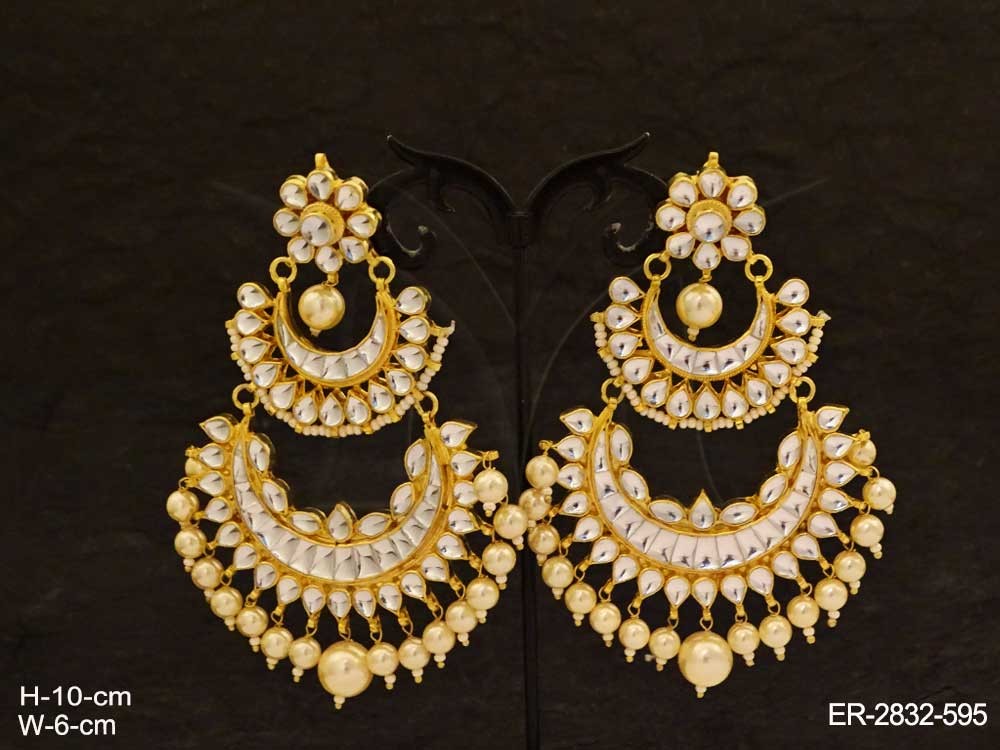
Double Chand Kundan Jewellery Earrings
Kundan jewelry cames from parts of North India and is practiced all over the country with variations. India, the land of plenty, has been known for the great diamonds, gemstones and jewelry from the ages of rajas and maharajas and before. The jewels from India are priceless and some of the techniques that were passed on from generation to generation are incomparable.
Way before the standard proportions of a round brilliant cut Stone were decided upon, and even before the shape of a Stone itself was defined, craftsmen cut the beautiful raw Kundan Stone in whatever shape was desired by the design of the final product.
Kundan means pure gold and very much like the name suggests, very fine hand beaten sheets of pure gold sheets were hammered together in form of cups or holders or containers to hold the diamond. Each ‘cup’ was filled with a natural glue like blackish colored substance called ‘lac’. This was then covered by a very fine film of pure silver which was used simply to cover the lac and gave a background to the Stone to make it look a bit shiny. The Stone was then ‘pressed’ in the lac and the edges of the cup were gently pressed onto the edges to secure the stone in place. Once the lac dried up, it would harden thus holding the stone in place.
Kundan jewellery is one of the oldest forms of jewellery native to India, dating back to the Mughal era. The technique probably developed as a result of artisans trying to fit uncut stone into handmade jewellery. One must remember that those were the days when stone cutting and setting were yet unheard of. The name, kundan, means ‘refined gold’ as it uses the purest form of molten gold for the foils used to set the stones. This style, of using gold foil instead of clasps and rims to set the stones, is also known as jadau. The kundan style is believed to have originated in North India—in Delhi—and flourished under the royal patronage of the Mughals. From the Mughal royal dynasty, the style spread to Rajasthan and Gujarat. Today, it is known world over and Rajasthan is considered to be the centre for the best kundankari workmanship.