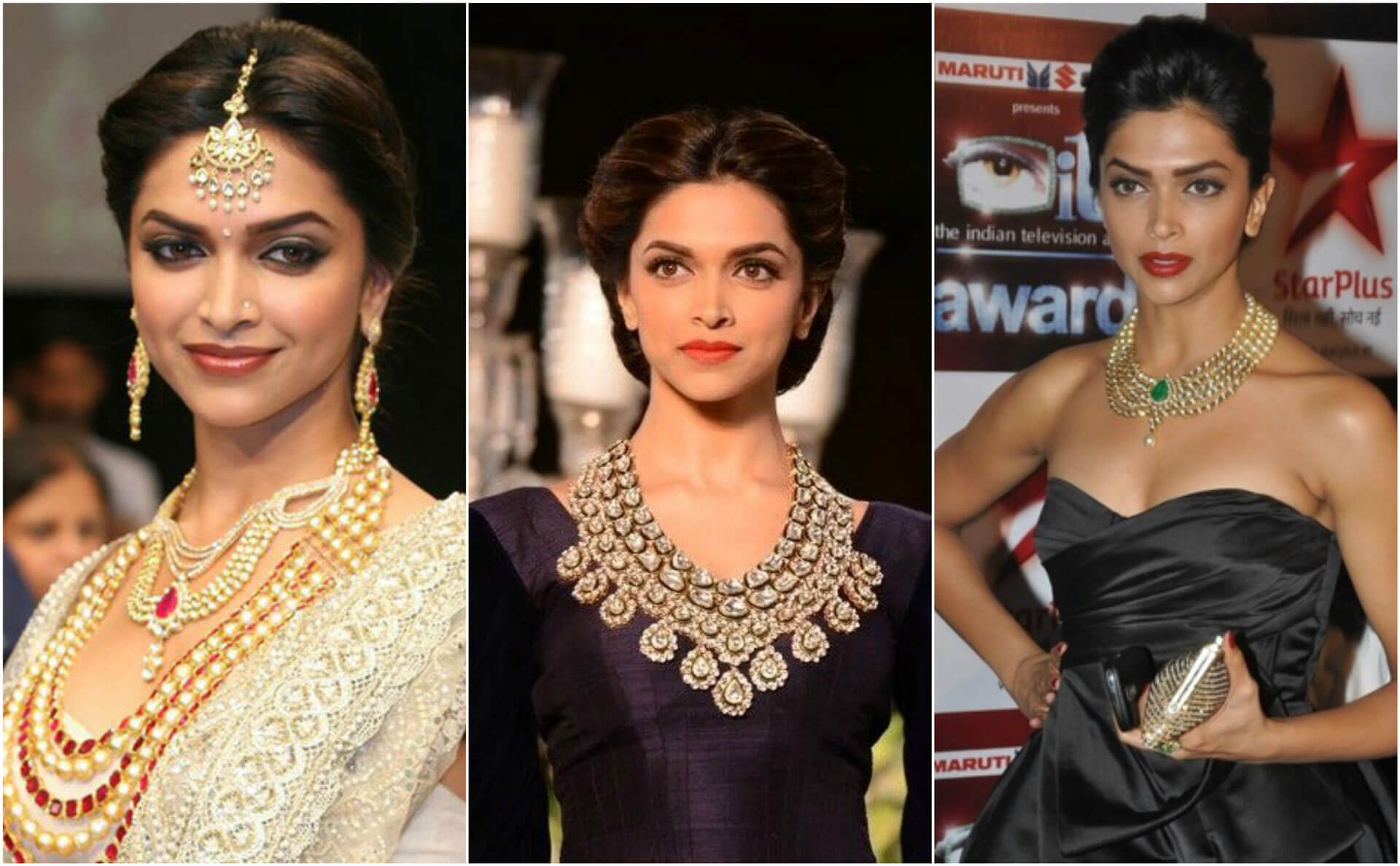
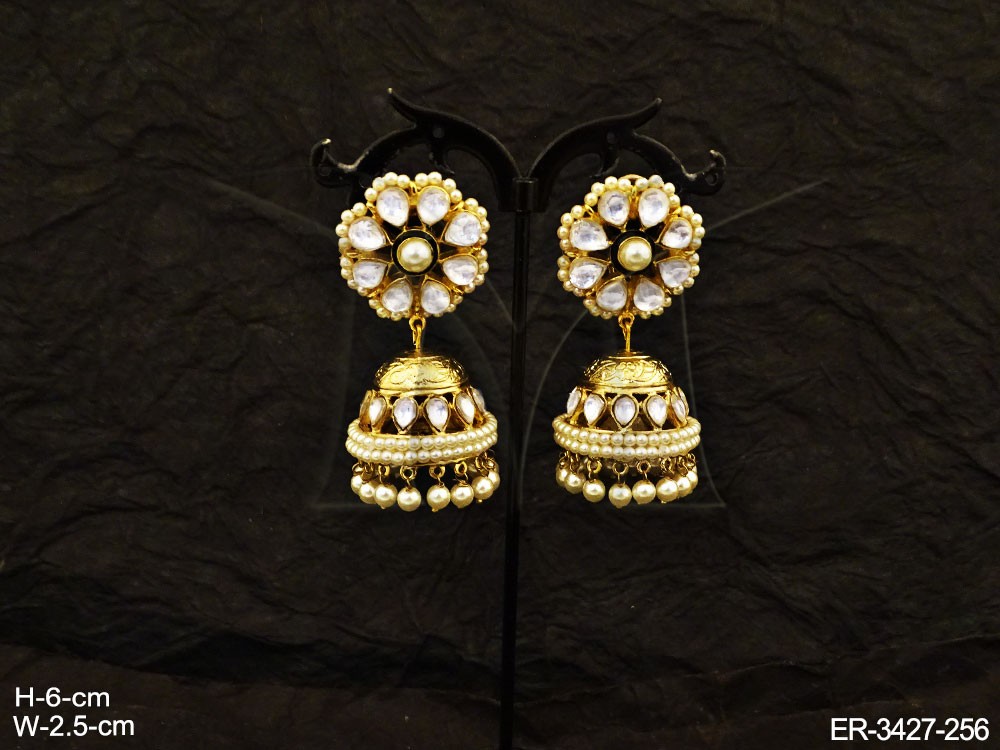
Traditional Bollywood Kundan Earrings

Traditional Bollywood Kundan Earrings

Traditional Bollywood Kundan Earrings


Kundan jewellery is created by setting carefully shaped, uncut diamonds and polished multicoloured gemstones into an exquisitely designed pure gold or faux metal base. The elaborate process begins with the skeletal framework called Ghaat. Thereafter, the Paadh procedure takes place, during which wax is poured onto the framework and moulded according to the design. Following this is the Khudai process, when the stones or uncut gems are fit into the framework. Meenakari then involves enameling to define the design details. Next, the Pakai process involves gold foils that hold the gems onto the framework; these are cold soldered using burnishing techniques. Finally, the gems are polished using the Chillai process.

Kundan flourished under royal patronage during the Mughal era. Over the years, the Kundan jewellery of the courts was successfully copied in silver in Rajasthan, Bihar and the Punjab and became popular with the common man.


Kundan is a traditional form of Indian gemstone jewellery involving a gem set with gold foil between the stones and its mount, usually for elaborate necklaces. The method is believed to have originated in the royal courts of Rajasthan and Gujarat. It is one of the older forms of jewellery made and worn in India. The word kundan means highly refined gold, and a highly refined and pure form of molten gold is used.

Kundan, also known as Bikaneri or Jaipuri jewellery, is a popular variation, wherein enameling with vivid colours and designs is on the reverse, while the kundan setting is in the front. The city of Jaipur in Rajasthan has traditionally been the centre for Kundan jewellery in India.
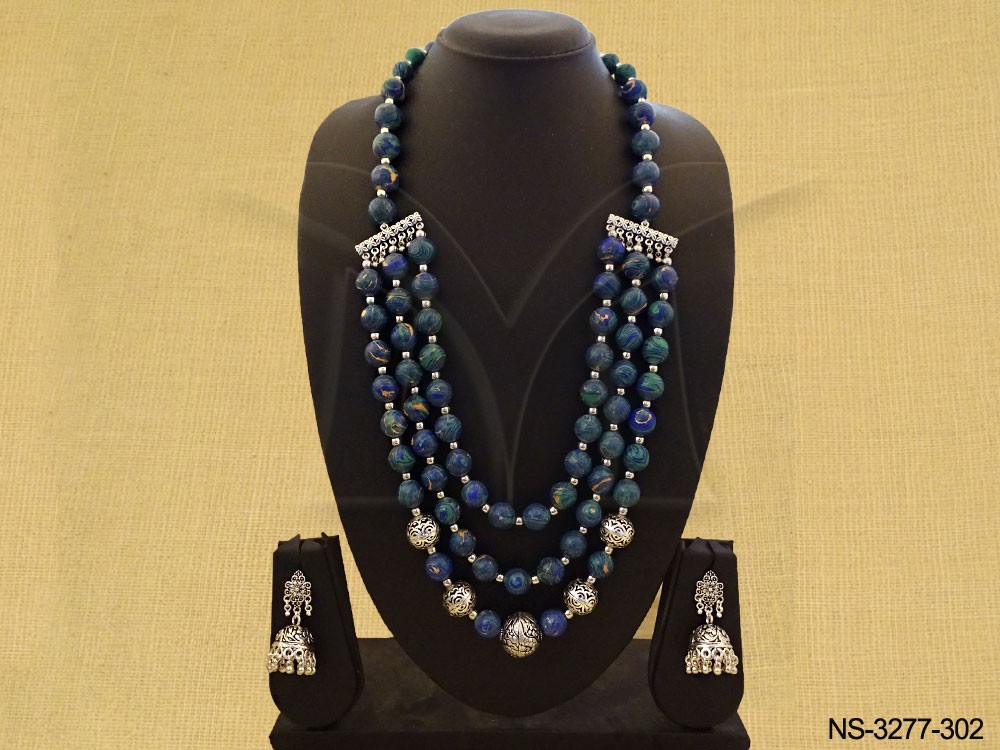
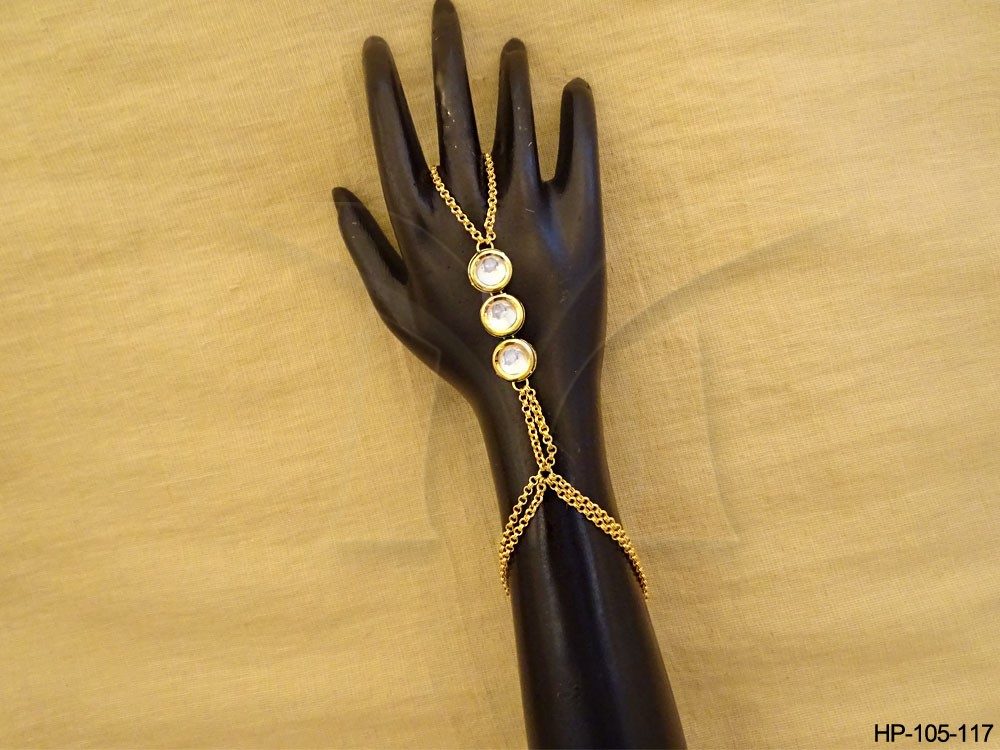
Traditional Bollywood Kundan Earrings

Kundan Jewellery Traditional Necklace

Kundan Jewellery Traditional Necklace

Kundan Jewellery Traditional Necklace


Kundan is a traditional form of Indian gemstone jewellery involving a gem set with gold foil between the stones and its mount, usually for elaborate necklaces. The method is believed to have originated in the royal courts of Rajasthan and Gujarat. It is one of the older forms of jewellery made and worn in India. The word kundan means highly refined gold, and a highly refined and pure form of molten gold is used.

Kundan, also known as Bikaneri or Jaipuri jewellery, is a popular variation, wherein enameling with vivid colours and designs is on the reverse, while the kundan setting is in the front. The city of Jaipur in Rajasthan has traditionally been the centre for Kundan jewellery in India.
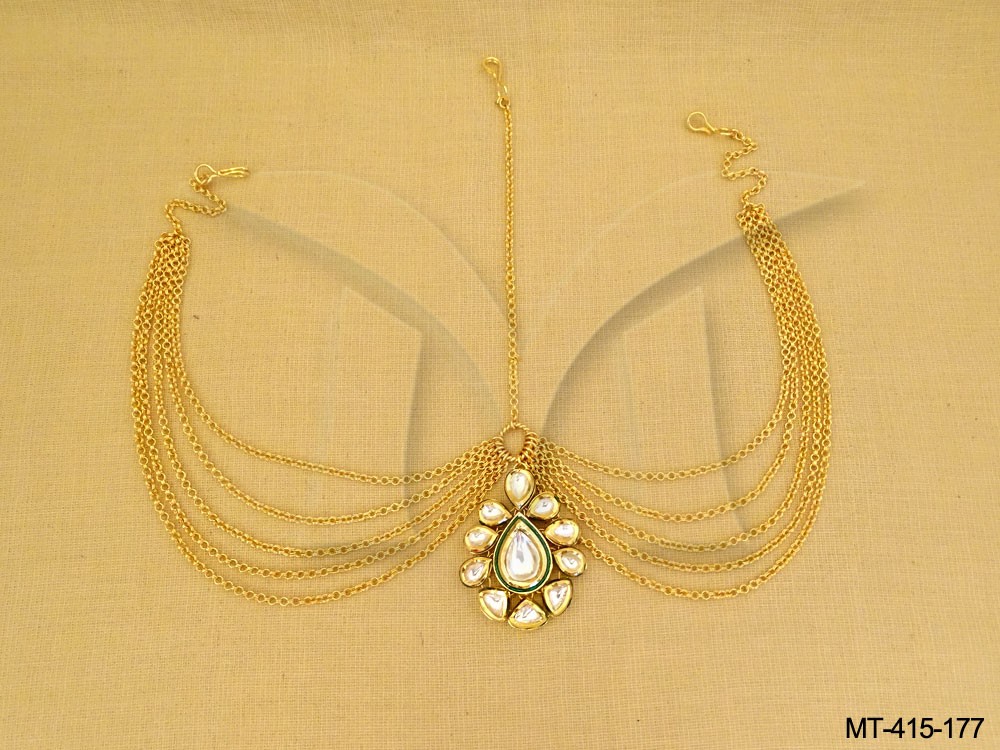
Kundan flourished under royal patronage during the Mughal era. Over the years, the Kundan jewellery of the courts was successfully copied in silver in Rajasthan, Bihar and the Punjab and became popular with the common man.

It remains an integral part of the traditional bridal wedding trousseau. Traditional settings, including the thappa and ras rawa, are experiencing a revival. Most recently, in the 2008 epic film, Jodhaa Akbar, the lead character portrayed by Aishwariya Rai was extensively shown wearing Kundan jewellery, highlighting its influence among Rajasthani royalty.

In 2006, “American Diamond” and Kundan jewellery contributed the largest share of both market value and volume (73 per cent) in the Indian jewellery market.

Kundan jewellery is created by setting carefully shaped, uncut diamonds and polished multicoloured gemstones into an exquisitely designed pure gold or faux metal base. The elaborate process begins with the skeletal framework called Ghaat. Thereafter, the Paadh procedure takes place, during which wax is poured onto the framework and moulded according to the design. Following this is the Khudai process, when the stones or uncut gems are fit into the framework. Meenakari then involves enameling to define the design details. Next, the Pakai process involves gold foils that hold the gems onto the framework; these are cold soldered using burnishing techniques. Finally, the gems are polished using the Chillai process.


Kundan Jewellery Traditional Necklace

Traditional Kundan Jewellery

Traditional Kundan Jewellery

Traditional Kundan Jewellery


Kundan is a traditional form of Indian gemstone jewellery involving a gem set with gold foil between the stones and its mount, usually for elaborate necklaces. The method is believed to have originated in the royal courts of Rajasthan and Gujarat. It is one of the older forms of jewellery made and worn in India. The word kundan means highly refined gold, and a highly refined and pure form of molten gold is used.

Kundan, also known as Bikaneri or Jaipuri jewellery, is a popular variation, wherein enameling with vivid colours and designs is on the reverse, while the kundan setting is in the front. The city of Jaipur in Rajasthan has traditionally been the centre for Kundan jewellery in India.
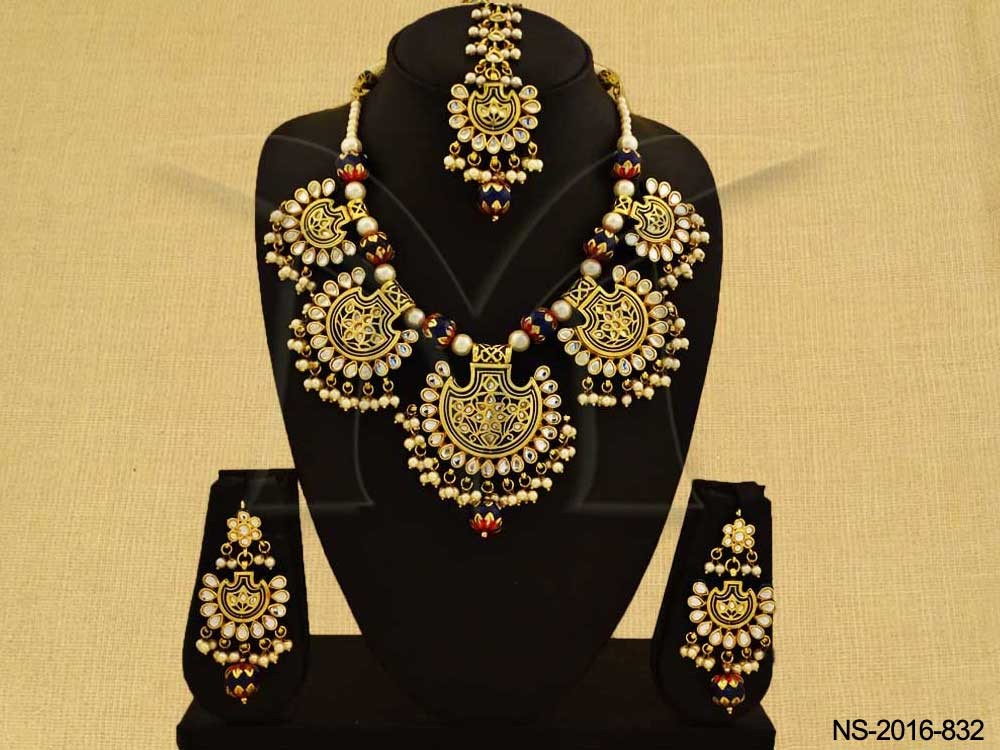
Kundan flourished under royal patronage during the Mughal era. Over the years, the Kundan jewellery of the courts was successfully copied in silver in Rajasthan, Bihar and the Punjab and became popular with the common man.

It remains an integral part of the traditional bridal wedding trousseau. Traditional settings, including the thappa and ras rawa, are experiencing a revival. Most recently, in the 2008 epic film, Jodhaa Akbar, the lead character portrayed by Aishwariya Rai was extensively shown wearing Kundan jewellery, highlighting its influence among Rajasthani royalty.

In 2006, “American Diamond” and Kundan jewellery contributed the largest share of both market value and volume (73 per cent) in the Indian jewellery market.

Kundan jewellery is created by setting carefully shaped, uncut diamonds and polished multicoloured gemstones into an exquisitely designed pure gold or faux metal base. The elaborate process begins with the skeletal framework called Ghaat. Thereafter, the Paadh procedure takes place, during which wax is poured onto the framework and moulded according to the design. Following this is the Khudai process, when the stones or uncut gems are fit into the framework. Meenakari then involves enameling to define the design details. Next, the Pakai process involves gold foils that hold the gems onto the framework; these are cold soldered using burnishing techniques. Finally, the gems are polished using the Chillai process.

Traditional Kundan Jewellery

Bridal Kundan Maang Tikka Setj jewellery

Bridal Kundan Maang Tikka Setj jewellery

Bridal Kundan Maang Tikka Setj jewellery


Bridal Kundan jewellery Maang Tikka Set is nothing less than an art. Every woman wants to own one; every mother wants one in her daughter’s bridal trousseau collection. Bridal Kundan keshri, as it is less popularly known, is the art of setting precious stones and gems with a gold foil between them and the mount. The process is laborious to say the least and it can take up to months to complete one elaborate Maang Tikka. Also, it is not just one artisan or goldsmith who works on a piece of Bridal Kundan jewellery Maang Tikka. An entire team of people with varied skill sets are required to work on each different aspect of the ornament till it is completed. The final look, it must be said, is like a waterfall of lightly shimmering gems. Pure elegance, sheer confidence—it’s all embodied in a Bridal Kundan set.

Bridal Kundan jewellery Maang Tikka is one of the oldest forms of jewellery native to India, dating back to the Mughal era. The technique probably developed as a result of artisans trying to fit uncut stone into handmade jewellery. One must remember that those were the days when stone cutting and setting were yet unheard of. The name, Bridal Kundan, means ‘refined gold’ as it uses the purest form of molten gold for the foils used to set the stones. This style, of using gold foil instead of clasps and rims to set the stones, is also known as jadau. The Bridal Kundan style is believed to have originated in North India—in Delhi—and flourished under the royal patronage of the Mughals. From the Mughal royal dynasty, the style spread to Rajasthan and Gujarat. Today, it is known world over and Rajasthan is considered to be the centre for the best Bridal Kundankari workmanship.

There are many styles and variations in Bridal Kundan work, with the meena Bridal Kundan being considered the most traditional. In this style, the stones are encrusted on one side and the reverse is decorated with elaborate enamel or meenakari work. It is said that the meenakari was a way of adding to the beauty of the Bridal Kundan jewellery Maang Tikka. But overtime it came to be as much admired as the Bridal Kundan itself.

Traditional Bridal Kundan jewellery Maang Tikka comes as a full set of an ornate Maang Tikka, matching bangles or bracelet and Maang Tikka. There are even Bridal Kundan rings and hair adornments. However, nowadays these can be bought separately as well. Bridal Kundan jewellery Maang Tikka is available in all styles—as rani haars and Maang Tikkas, as a pendant at the end of a chain of precious stones or pearls, with just precious stone setting or gems and polka (the diamond stones used in the Bridal Kundan style). The bangles and Maang Tikka too can be quite the statement pieces in themselves. With Bridal Kundan jewellery Maang Tikka, even the smallest piece is elaborate. It definitely can’t be termed as light jewellery. So it calls for a special occasion to bring out that Bridal Kundan set.


Bridal Kundan Maang Tikka Setj jewellery

Bridal Kundan jewellery Necklace Set

Bridal Kundan jewellery Necklace Set

Bridal Kundan jewellery Necklace Set


Bridal Kundan jewellery Necklace Set is nothing less than an art. Every woman wants to own one; every mother wants one in her daughter’s bridal trousseau collection. Bridal Kundan keshri, as it is less popularly known, is the art of setting precious stones and gems with a gold foil between them and the mount. The process is laborious to say the least and it can take up to months to complete one elaborate necklace. Also, it is not just one artisan or goldsmith who works on a piece of Bridal Kundan jewellery Necklace. An entire team of people with varied skill sets are required to work on each different aspect of the ornament till it is completed. The final look, it must be said, is like a waterfall of lightly shimmering gems. Pure elegance, sheer confidence—it’s all embodied in a Bridal Kundan set.

Bridal Kundan jewellery Necklace is one of the oldest forms of jewellery native to India, dating back to the Mughal era. The technique probably developed as a result of artisans trying to fit uncut stone into handmade jewellery. One must remember that those were the days when stone cutting and setting were yet unheard of. The name, Bridal Kundan, means ‘refined gold’ as it uses the purest form of molten gold for the foils used to set the stones. This style, of using gold foil instead of clasps and rims to set the stones, is also known as jadau. The Bridal Kundan style is believed to have originated in North India—in Delhi—and flourished under the royal patronage of the Mughals. From the Mughal royal dynasty, the style spread to Rajasthan and Gujarat. Today, it is known world over and Rajasthan is considered to be the centre for the best Bridal Kundankari workmanship.

There are many styles and variations in Bridal Kundan work, with the meena Bridal Kundan being considered the most traditional. In this style, the stones are encrusted on one side and the reverse is decorated with elaborate enamel or meenakari work. It is said that the meenakari was a way of adding to the beauty of the Bridal Kundan jewellery Necklace. But overtime it came to be as much admired as the Bridal Kundan itself.

Traditional Bridal Kundan jewellery Necklace comes as a full set of an ornate necklace, matching bangles or bracelet and Necklace. There are even Bridal Kundan rings and hair adornments. However, nowadays these can be bought separately as well. Bridal Kundan jewellery Necklace is available in all styles—as rani haars and necklaces, as a pendant at the end of a chain of precious stones or pearls, with just precious stone setting or gems and polka (the diamond stones used in the Bridal Kundan style). The bangles and Necklace too can be quite the statement pieces in themselves. With Bridal Kundan jewellery Necklace, even the smallest piece is elaborate. It definitely can’t be termed as light jewellery. So it calls for a special occasion to bring out that Bridal Kundan set.


Bridal Kundan jewellery Necklace Set