Kundan Jewellery Maang Tikka

Kundan Jewellery Maang Tikka

Kundan Jewellery Maang Tikka


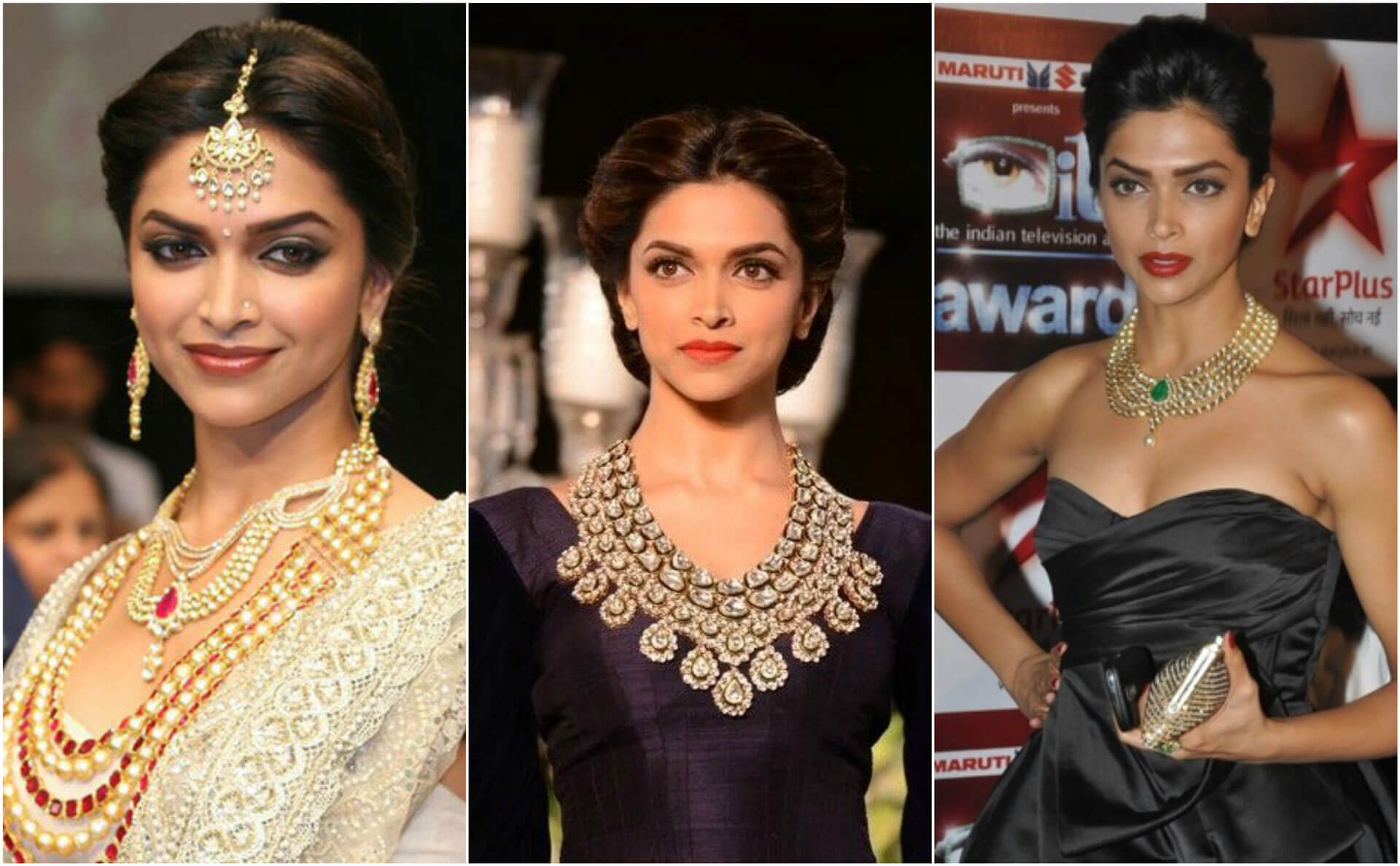
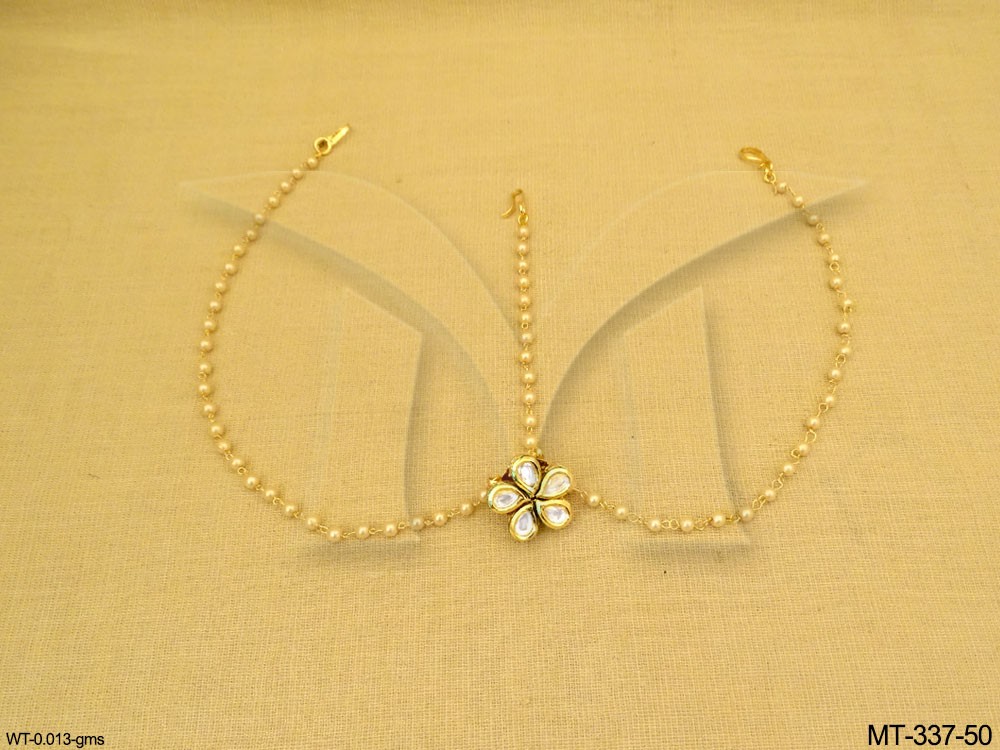
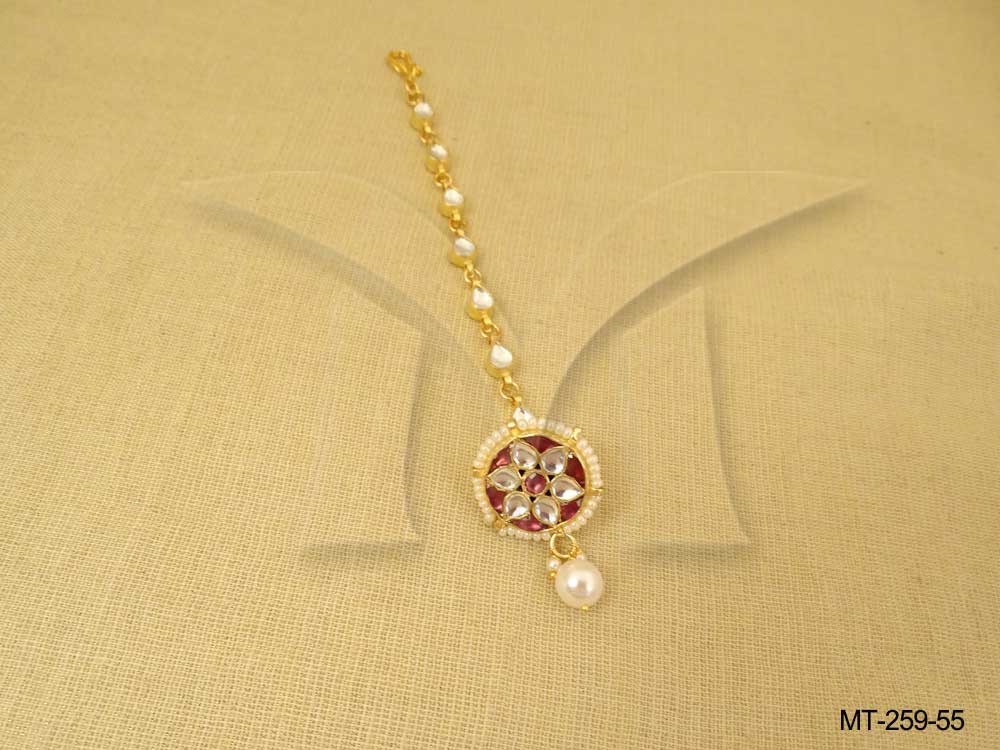
A comprehensive range of Kundan Jewellery Maang Tikka. These sets are finely carved to superb finish which gives them an appealing look by our trusted vendors. Known for their brilliant shine, purity and beauty, these are highly appreciated by our clients. In addition to this, our offered range suits every girl at time of her marriage.

Kundan jewellery is nothing less than an art. Every woman wants to own one; every mother wants one in her daughter’s bridal trousseau collection. Kundan keshri, as it is less popularly known, is the art of setting precious stones and gems with a gold foil between them and the mount. The process is laborious to say the least and it can take up to months to complete one elaborate Maang Tikka. Also, it is not just one artisan or goldsmith who works on a piece of kundan jewellery. An entire team of people with varied skill sets are required to work on each different aspect of the ornament till it is completed. The final look, it must be said, is like a waterfall of lightly shimmering gems. Pure elegance, sheer confidence—it’s all embodied in a kundan set.
Traditional Kundan Jewellery Maang Tikka comes as a full set of an ornate Maang Tikka, matching bangles or bracelet and Maang Tikka. There are even kundan rings and hair adornments. However, nowadays these can be bought separately as well. Kundan jewellery is available in all styles—as rani haars and Maang Tikkas, as a pendant at the end of a chain of precious stones or pearls, with just precious stone setting or gems and polka (the diamond stones used in the kundan style). The bangles and Maang Tikka too can be quite the statement pieces in themselves. With Kundan Jewellery Maang Tikka, even the smallest piece is elaborate. It definitely can’t be termed as light jewellery. So it calls for a special occasion to bring out that kundan set.

There are many styles and variations in Kundan work, with the meena kundan being considered the most traditional. In this style, the stones are encrusted on one side and the reverse is decorated with elaborate enamel or meenakari work. It is said that the meenakari was a way of adding to the beauty of the kundan jewellery. But overtime it came to be as much admired as the kundan itself.

Kundan Jewellery Maang Tikka is one of the oldest forms of jewellery native to India, dating back to the Mughal era. The technique probably developed as a result of artisans trying to fit uncut stone into handmade jewellery. One must remember that those were the days when stone cutting and setting were yet unheard of. The name, kundan, means ‘refined gold’ as it uses the purest form of molten gold for the foils used to set the stones. This style, of using gold foil instead of clasps and rims to set the stones, is also known as jadau. The kundan style is believed to have originated in North India—in Delhi—and flourished under the royal patronage of the Mughals. From the Mughal royal dynasty, the style spread to Rajasthan and Gujarat. Today, it is known world over and Rajasthan is considered to be the centre for the best kundankari workmanship.
 

Kundan Jewellery Maang Tikka

Kundan Jewellery Bracelets

Kundan Jewellery Bracelets

Kundan Jewellery Bracelets


Kundan jewellery is nothing less than an art. Every woman wants to own one; every mother wants one in her daughter’s bridal trousseau collection. Kundan keshri, as it is less popularly known, is the art of setting precious stones and gems with a gold foil between them and the mount. The process is laborious to say the least and it can take up to months to complete one elaborate Bracelets. Also, it is not just one artisan or goldsmith who works on a piece of kundan jewellery. An entire team of people with varied skill sets are required to work on each different aspect of the ornament till it is completed. The final look, it must be said, is like a waterfall of lightly shimmering gems. Pure elegance, sheer confidence—it’s all embodied in a kundan set.
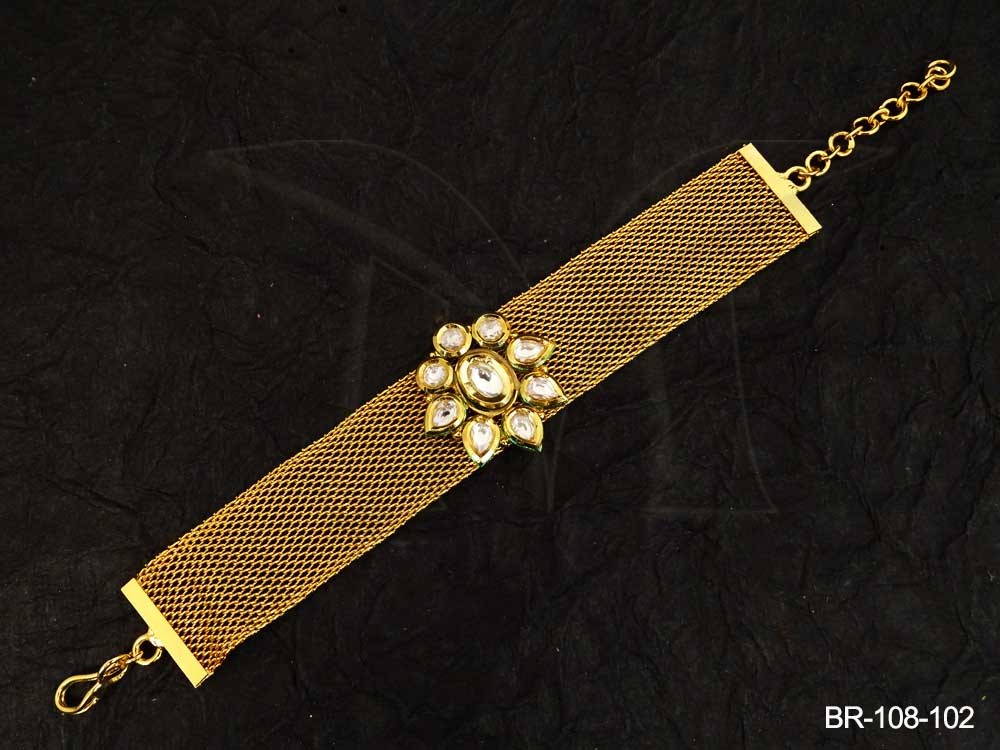
A comprehensive range of Kundan Jewellery Bracelets. These sets are finely carved to superb finish which gives them an appealing look by our trusted vendors. Known for their brilliant shine, purity and beauty, these are highly appreciated by our clients. In addition to this, our offered range suits every girl at time of her marriage.

There are many styles and variations in Kundan work, with the meena kundan being considered the most traditional. In this style, the stones are encrusted on one side and the reverse is decorated with elaborate enamel or meenakari work. It is said that the meenakari was a way of adding to the beauty of the kundan jewellery. But overtime it came to be as much admired as the kundan itself.

Traditional Kundan Jewellery Bracelets comes as a full set of an ornate Bracelets, matching bangles or bracelet and Bracelets. There are even kundan rings and hair adornments. However, nowadays these can be bought separately as well. Kundan jewellery is available in all styles—as rani haars and Braceletss, as a pendant at the end of a chain of precious stones or pearls, with just precious stone setting or gems and polka (the diamond stones used in the kundan style). The bangles and Bracelets too can be quite the statement pieces in themselves. With Kundan Jewellery Bracelets, even the smallest piece is elaborate. It definitely can’t be termed as light jewellery. So it calls for a special occasion to bring out that kundan set.

Kundan Jewellery Bracelets is one of the oldest forms of jewellery native to India, dating back to the Mughal era. The technique probably developed as a result of artisans trying to fit uncut stone into handmade jewellery. One must remember that those were the days when stone cutting and setting were yet unheard of. The name, kundan, means ‘refined gold’ as it uses the purest form of molten gold for the foils used to set the stones. This style, of using gold foil instead of clasps and rims to set the stones, is also known as jadau. The kundan style is believed to have originated in North India—in Delhi—and flourished under the royal patronage of the Mughals. From the Mughal royal dynasty, the style spread to Rajasthan and Gujarat. Today, it is known world over and Rajasthan is considered to be the centre for the best kundankari workmanship.
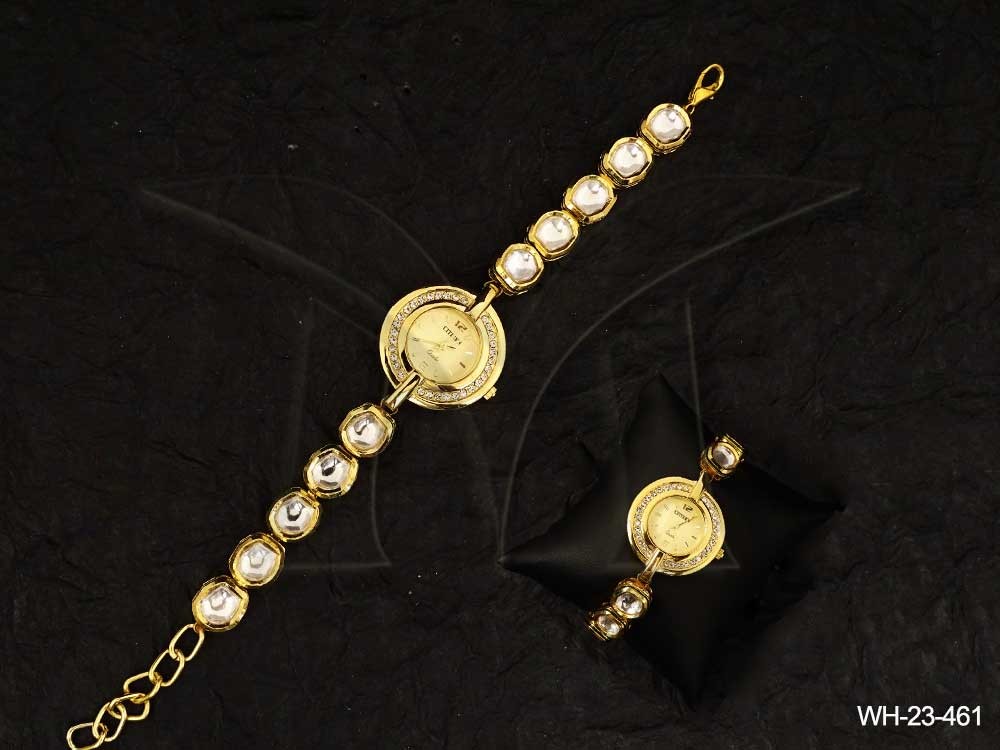
 

Kundan Jewellery Bracelets

Kundan Maang Tikka Set

Kundan Maang Tikka Set

Kundan Maang Tikka Set


A comprehensive range of Kundan Maang Tikka Set. These sets are finely carved to superb finish which gives them an appealing look by our trusted vendors. Known for their brilliant shine, purity and beauty, these are highly appreciated by our clients. In addition to this, our offered range suits every girl at time of her marriage.

Kundan jewellery is nothing less than an art. Every woman wants to own one; every mother wants one in her daughter’s bridal trousseau collection. Kundan keshri, as it is less popularly known, is the art of setting precious stones and gems with a gold foil between them and the mount. The process is laborious to say the least and it can take up to months to complete one elaborate Maang Tikka. Also, it is not just one artisan or goldsmith who works on a piece of kundan jewellery. An entire team of people with varied skill sets are required to work on each different aspect of the ornament till it is completed. The final look, it must be said, is like a waterfall of lightly shimmering gems. Pure elegance, sheer confidence—it’s all embodied in a kundan set.

Traditional kundan jewellery comes as a full set of an ornate Maang Tikka, matching bangles or bracelet and earrings. There are even kundan rings and hair adornments. However, nowadays these can be bought separately as well. Kundan jewellery is available in all styles—as rani haars and Maang Tikka, as a pendant at the end of a chain of precious stones or pearls, with just precious stone setting or gems and polka (the diamond stones used in the kundan style). The bangles and earrings too can be quite the statement pieces in themselves. With kundan jewellery, even the smallest piece is elaborate. It definitely can’t be termed as light jewellery. So it calls for a special occasion to bring out that kundan set.

There are many styles and variations in Kundan work, with the meena kundan being considered the most traditional. In this style, the stones are encrusted on one side and the reverse is decorated with elaborate enamel or meenakari work. It is said that the meenakari was a way of adding to the beauty of the kundan jewellery. But overtime it came to be as much admired as the kundan itself.


Kundan Maang Tikka Set

Kundan jewellery Watches

Kundan jewellery Watches

Kundan jewellery Watches

Kundan jewellery Watches is one among the oldest kinds of jewellery creating technique in india.

It is believed that Kundan jewellery first originated in india in urban center throughout the Mughal amount. Back then, the royal category wont to adorn convoluted items of Kundan jewellery. However, at a later stage, artisans stirred to Rajasthan.

Over a amount of your time, a full cluster of Kundan artisans settled in Rajasthan. That’s once Rajasthan got the name of creating the best Kundan jewellery in india. Today, the cities of Bikaner and Nathdwara area unit accepted for his or her Kundan jewellery
Making of Kundan jewellery Watches follows a awfully convoluted method. it’s an extended method with every stage handled by a separate, trained worker.

It starts with beating of gold during a} very skinny sheet. This acts because the base for the jewellery. This sheet is then stuffed with lac, or laakh. lac may be a byproduct of tree sap and illustrious to be a rosin. it’s during this lac that the stones or gems area unit set with a facilitate of hot coal.

In order to convey the stones a powerful grip on the metal, twenty four carat liquefied gold is poured into the perimeters. This twenty four carat gold is what’s called Kundan, and therefore the name. Kundan is poured, or rather inserted within the holes with the assistance of a awfully tiny stick.

Parallel to the current method of setting the stones is that the method of creating the frame of the jewellery. Frame of the jewellery refers as to if it’s being created as earrings, necklaces, pendants etc. Once the frame is formed, it’s then welded to the bottom with the assistance of gold.

At the top of the entire method, the jewellery piece if then cleansed and washed to get rid of dark spots owing to attachment.

Sometimes, to create the jewellery look even a lot of convoluted, Meenakari is finished on that. Meenakari refers to the art of engraving on metal. historically, Meenakari is finished on gold solely. However, in recent years, it’s being done on metals like copper etc. too.


Kundan jewellery Watches

Traditional Bollywood Kundan Maang Tikka Set

Kundan Maang Tikka Set

Kundan Maang Tikka Set


A comprehensive range of Kundan Maang Tikka Set. These sets are finely carved to superb finish which gives them an appealing look by our trusted vendors. Known for their brilliant shine, purity and beauty, these are highly appreciated by our clients. In addition to this, our offered range suits every girl at time of her marriage.

Kundan jewellery is nothing less than an art. Every woman wants to own one; every mother wants one in her daughter’s bridal trousseau collection. Kundan keshri, as it is less popularly known, is the art of setting precious stones and gems with a gold foil between them and the mount. The process is laborious to say the least and it can take up to months to complete one elaborate Maang Tikka. Also, it is not just one artisan or goldsmith who works on a piece of kundan jewellery. An entire team of people with varied skill sets are required to work on each different aspect of the ornament till it is completed. The final look, it must be said, is like a waterfall of lightly shimmering gems. Pure elegance, sheer confidence—it’s all embodied in a kundan set.

There are many styles and variations in Kundan work, with the meena kundan being considered the most traditional. In this style, the stones are encrusted on one side and the reverse is decorated with elaborate enamel or meenakari work. It is said that the meenakari was a way of adding to the beauty of the kundan jewellery. But overtime it came to be as much admired as the kundan itself.

Kundan jewellery is one of the oldest forms of jewellery native to India, dating back to the Mughal era. The technique probably developed as a result of artisans trying to fit uncut stone into handmade jewellery. One must remember that those were the days when stone cutting and setting were yet unheard of. The name, kundan, means ‘refined gold’ as it uses the purest form of molten gold for the foils used to set the stones. This style, of using gold foil instead of clasps and rims to set the stones, is also known as jadau. The kundan style is believed to have originated in North India—in Delhi—and flourished under the royal patronage of the Mughals. From the Mughal royal dynasty, the style spread to Rajasthan and Gujarat. Today, it is known world over and Rajasthan is considered to be the centre for the best kundankari workmanship.
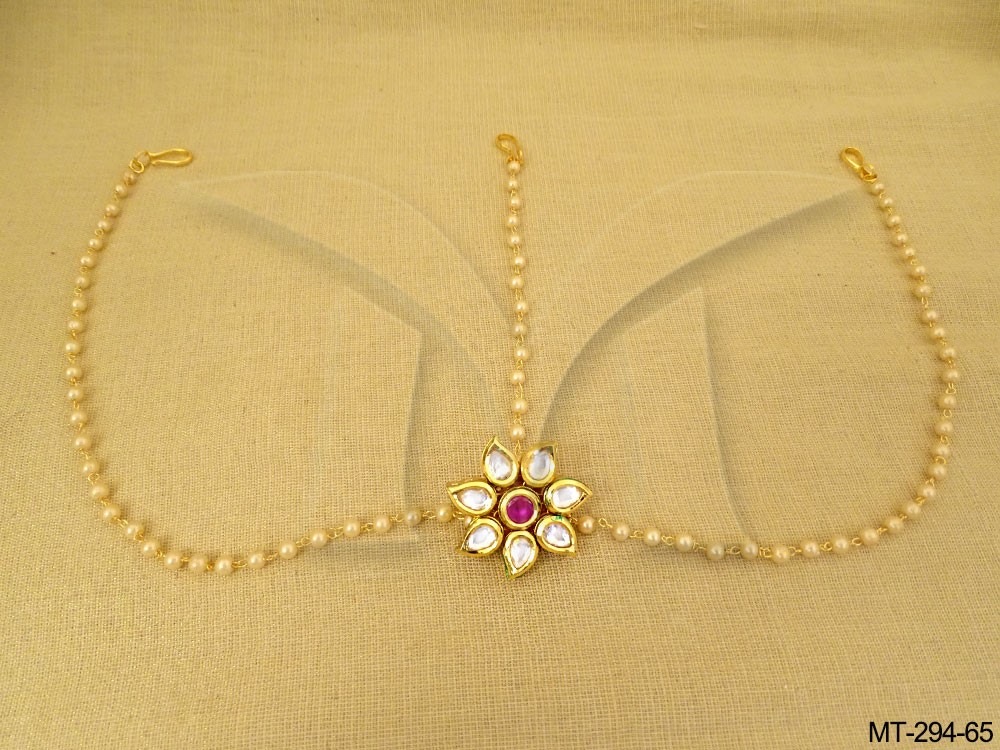
Traditional kundan jewellery comes as a full set of an ornate Maang Tikka, matching bangles or bracelet and earrings. There are even kundan rings and hair adornments. However, nowadays these can be bought separately as well. Kundan jewellery is available in all styles—as rani haars and Maang Tikka, as a pendant at the end of a chain of precious stones or pearls, with just precious stone setting or gems and polka (the diamond stones used in the kundan style). The bangles and earrings too can be quite the statement pieces in themselves. With kundan jewellery, even the smallest piece is elaborate. It definitely can’t be termed as light jewellery. So it calls for a special occasion to bring out that kundan set.


Kundan Maang Tikka Set